Industry
- home inspection software
- property inspection
- floor plans
- virtual tours
- inspection report
Your Inspectors Already Walk Every Room. Your Reports Should Show It.
Your inspectors already walk every room. What a floor plan and a 360° tour add to an inspection report, and what to check before adding them.

Open almost any home inspection report and you'll find the same thing: dozens of close-up photos, a list of findings, and a lot of text describing where things are. "Second bedroom, north wall, below the window."
The inspector knew exactly where that was. They were standing there. The reader has to imagine it.
That's the gap a floor plan and a 360° tour close, and the inspector is already collecting everything needed to fill it.
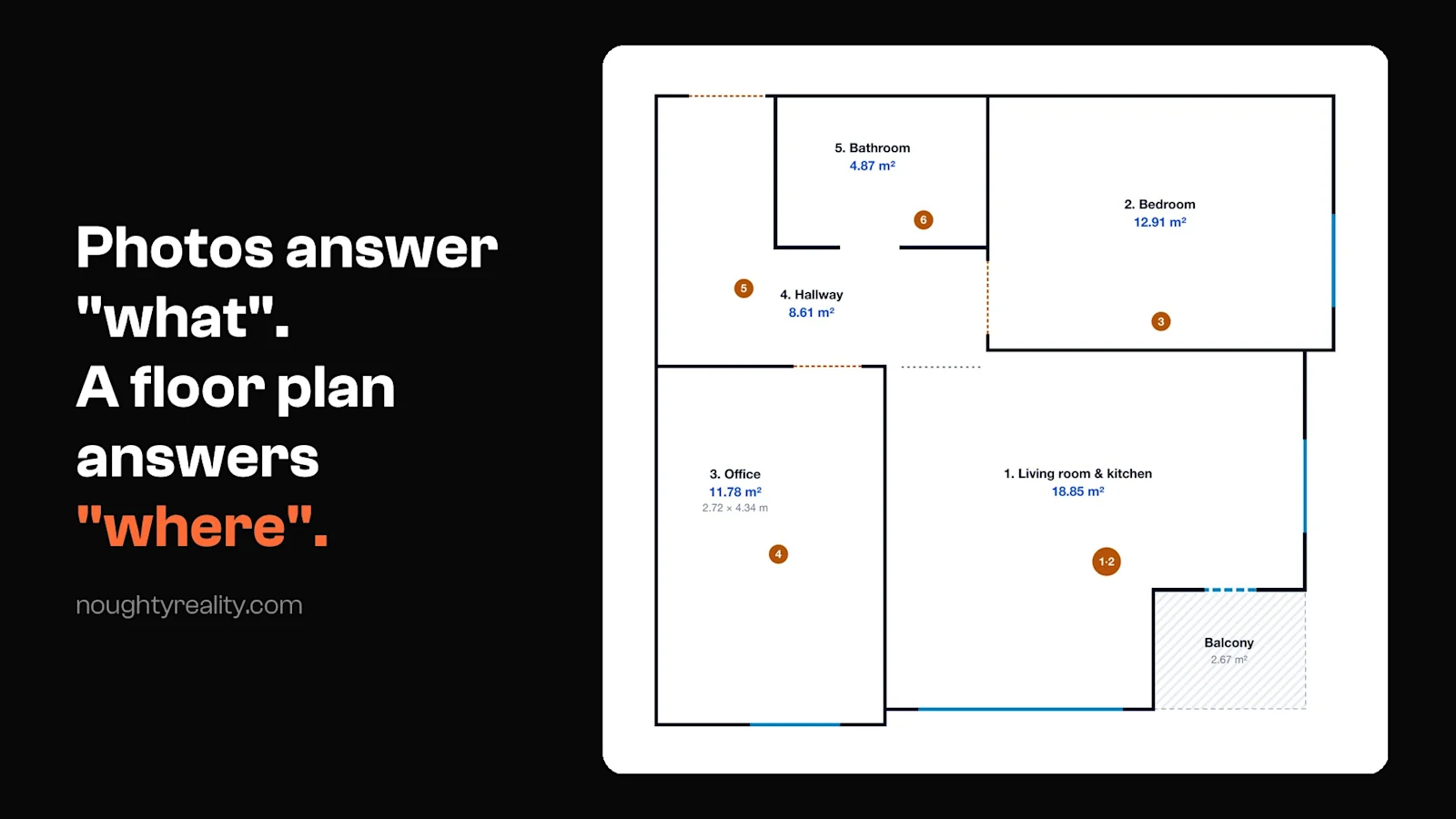
Photos answer "what". Clients are asking "where".
Buyers, landlords, tenants and insurers want to understand a property without visiting it. A close-up photo tells them what a crack looks like. It doesn't tell them which room it's in, how big that room is, or what it looks like from the doorway.
That matters most when something is disputed. A move-out deposit. A repair claim. A disagreement about what was there on the day. All of them come down to the same questions: which room, which wall, and how did it look at the time.
A floor plan answers "where". A 360° tour answers "how did it look". Together, they turn a report into something the reader can walk through.
What a plan and a tour add to an inspection report
Navigation. A floor plan turns a long report into something the reader can move through. Findings stop being paragraphs and start being places.
Scale. Room sizes answer questions photos can't: is that damp patch in a box room or the main bedroom?
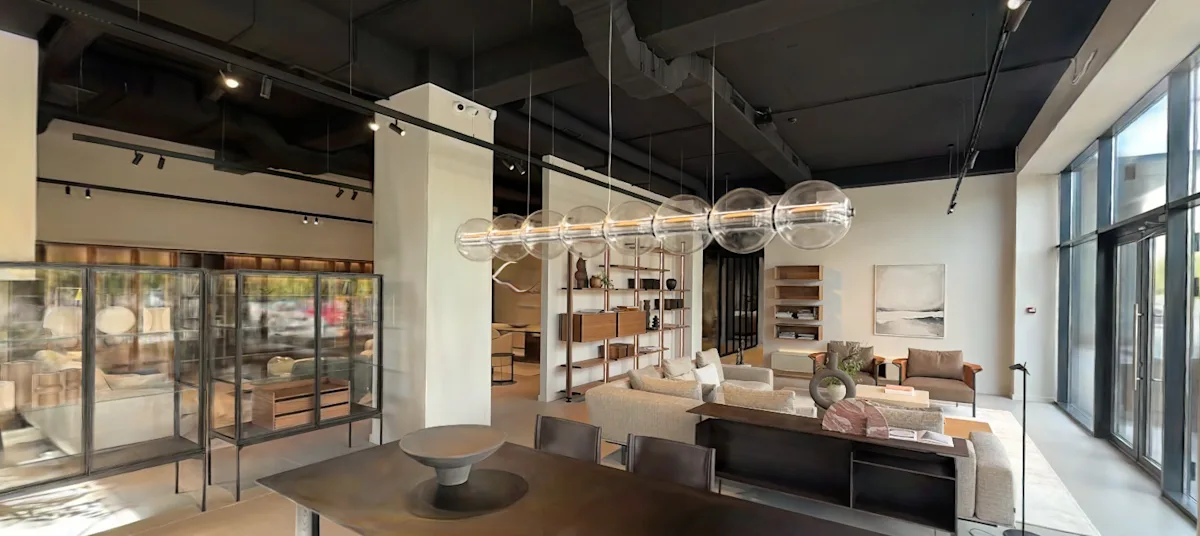
Context. A 360° view of the room shows what's around a finding, not just the finding itself. That's often what a dispute is really about.
A record of the day. Photos taken from known positions, on a known date, are much harder to argue with than a set of loose pictures.
None of this requires a new visit. The inspector already walks every room in order. The only question is whether that walk is recorded as space or as a pile of pictures.
The practical part: capture during the visit
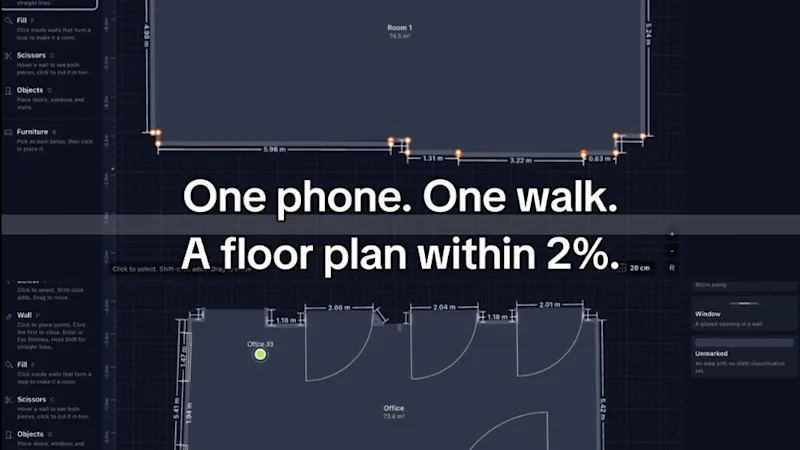
Phones with LiDAR sensors can now measure rooms while someone walks through them, and stitch 360° panoramas on the device. For an inspector, that means the plan and the tour can be made on the same walk as the inspection, without a separate camera or a second trip.
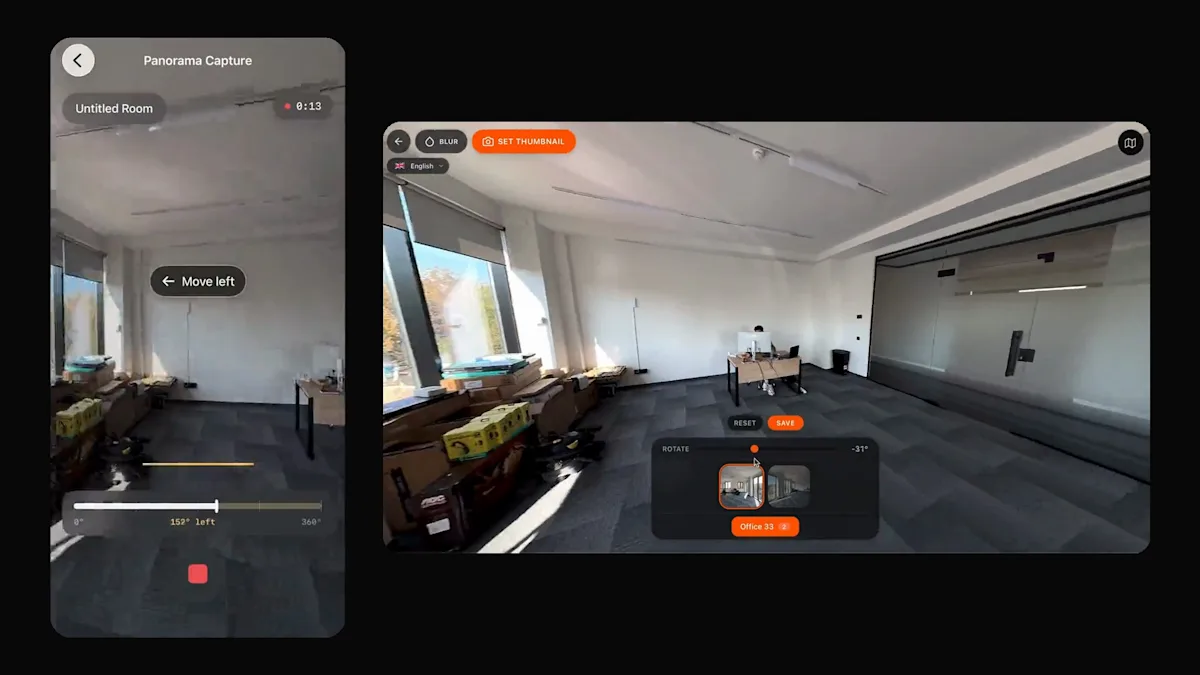
Two things are worth checking in any tool you consider. First, can the inspector see the result on site and re-shoot, or do they find problems the next day? Second, what happens to personal details in occupied homes: faces, documents, family photos? Automatic blurring should be the default, not an extra.
Build it, borrow it, or embed it?
If you run an inspection platform, you've probably had this conversation.
Build it yourself. You get full control. You also need computer-vision and AR engineers, months of work, and someone to keep it running on every new iPhone. For most inspection companies, that's a different business.
Send users to another app. It's quick to start. But your inspectors leave your product mid-job, the data sits in someone else's cloud, and the report your client receives looks like two products stitched together.
Embed capture in your own app. Inspectors stay in your product, and the data and the published report stay yours. It needs an integration, but no computer-vision team of your own.
One honest note: if you don't have your own mobile app, embedding isn't the right path. A ready-made inspection app will serve you better.
What changes for your clients
The finding stays the same. What changes is everything around it. The client opens the report, sees the floor plan, taps the bedroom, and looks around the room the inspector stood in. The crack under the window is no longer a sentence. It's a place.
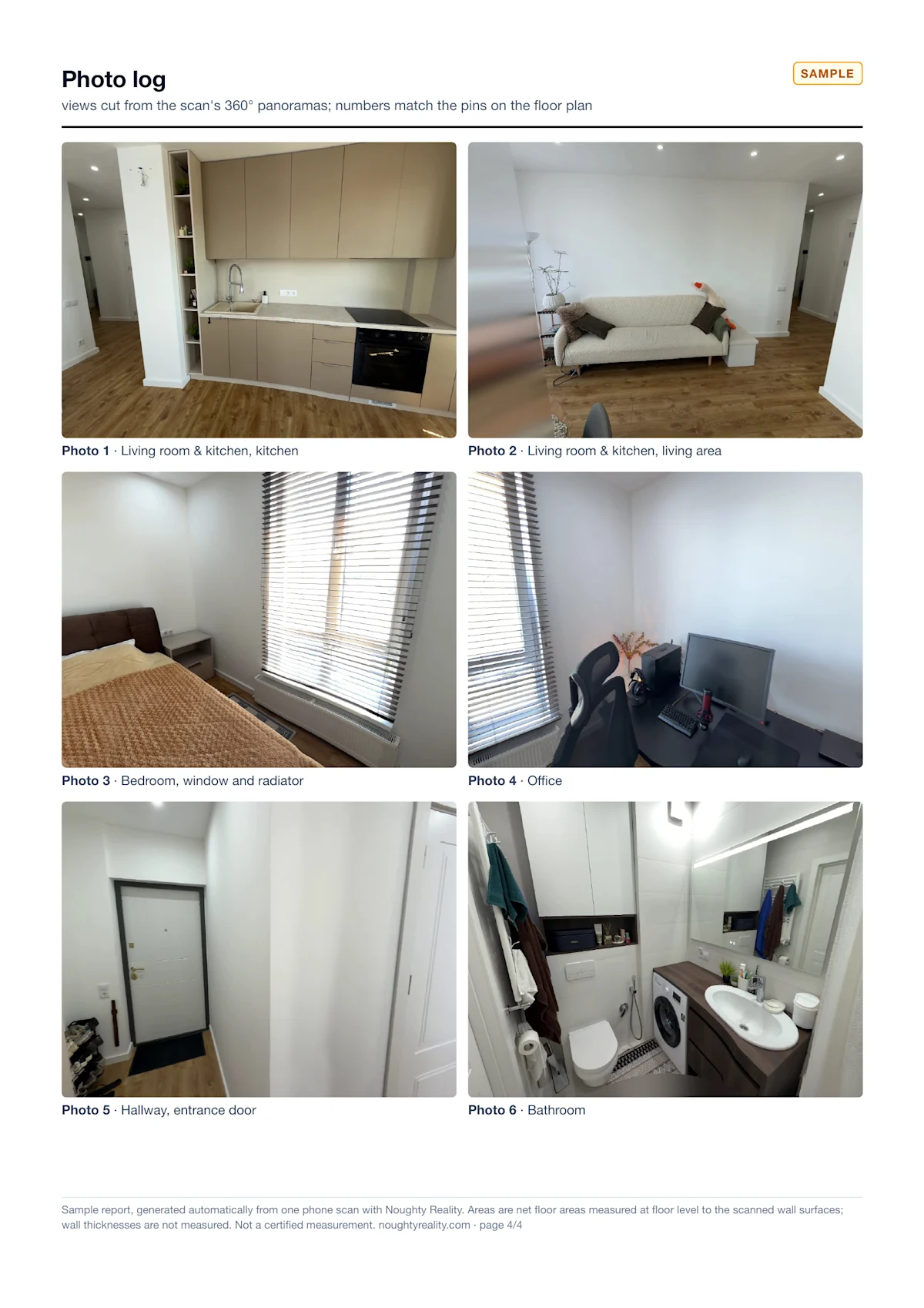
And for you, it's a better report from a visit you were already paying for.
We build capture that inspection platforms add to their own apps: a floor plan and a 360° tour from one iPhone walk. Try a live tour →